On the evening of Tuesday, October 6, Martin Soto walked out of a federal immigration facility wearing an ankle monitor and into the arms of a family he had not seen in eight months. A U.S. district court judge had just ruled his detention illegal — citing the conditions he had endured, his deteriorating mental health, and the absence of any sufficient reason to keep holding him.
Soto, a Peruvian immigrant, had become the face of a fight Newark, New Jersey, has refused to let rest. In February, Immigration and Customs Enforcement took him from a store where he was buying diapers for his 11-month-old son. In May, he was among the leaders of a hunger and labor strike at Delaney Hall, the largest immigration detention facility on the East Coast, joined by around 300 detainees. The strike ended in June, broken rather than won. The win came afterward, and it is small and enormous at the same time: a court held that a man the government took from a supermarket parking lot could not lawfully be held — and the record of the fight, its demands, its crackdown, its denials, went public in a way that a billion-dollar detention contract never intended.
The strike
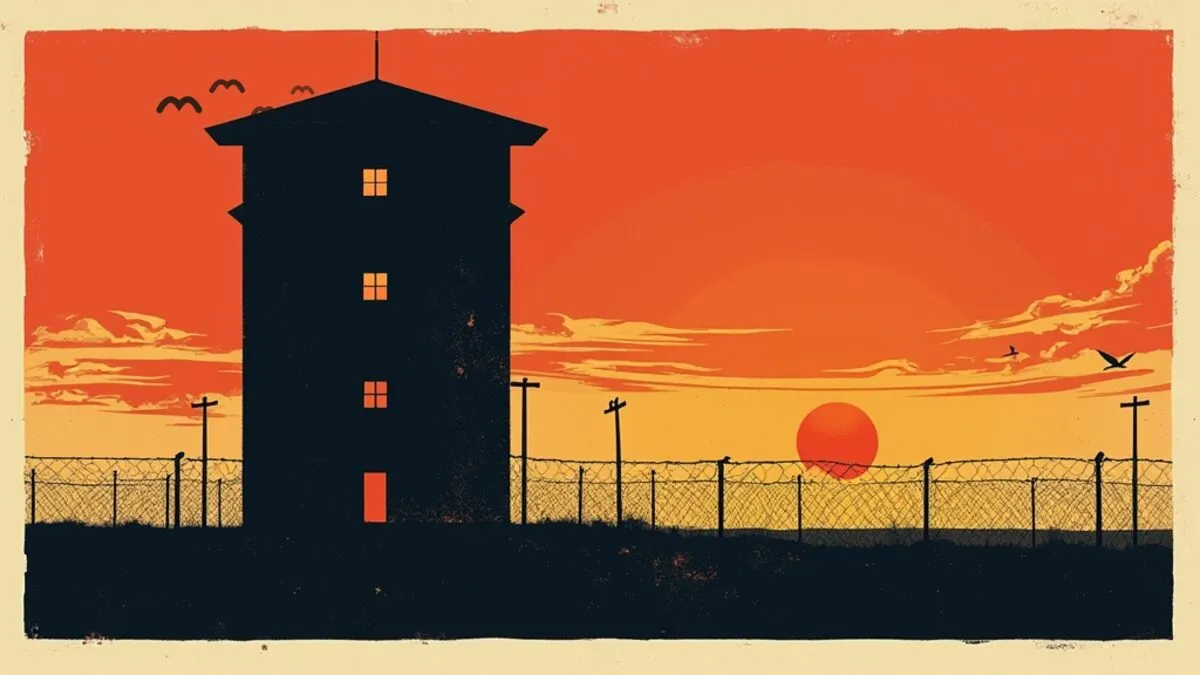
Delaney Hall is a detention facility in an industrial corner of Newark, near the airport, reopened in 2025 under a fifteen-year, $1 billion contract between the GEO Group and ICE. Its authorized capacity is 1,196 beds. Before the current iteration, it held immigration detainees from 2011 to 2017. In between, it was a machine that earned a contract, not a place people wanted to be known for.
On Friday, May 22, around 300 of the people inside declared a joint hunger and labor strike. The labor part was the point. Detainees at Delaney Hall maintain the facility — cleaning, upkeep, work of a kind — for roughly a dollar a day. On that morning they stopped working, and then they stopped eating.
Their demands, as stated by the strikers and the organizations outside the fence: the release of everyone detained, especially the elderly, the pregnant, the young, and those with serious medical conditions; a meeting with the governor of New Jersey; improved conditions; habeas corpus — the right to pursue one's immigration case outside detention; and an end to the coercive pressure on detainees to "self-deport."
The conditions being protested are documented by the facility's own legal advocates, the Nova Law Group: people sleeping on the floor of overcrowded rooms, cold showers, no blankets, expired food — in one letter, hundreds of detainees wrote of being served food infested with worms — and no medical care for people living with cancer or diabetes.
The Department of Homeland Security denied all of it. In the government's words: "There is NO hunger strike at Delaney Hall. There are NO subprime conditions or abuse at the facility."
The line outside
The strike never happened only behind the fence. It began, in part, on the sidewalk in front of it.
Gabriela Soto, who was four months pregnant when the strike began, stood outside on day one. For the next months she translated the calls coming from inside — the descriptions of conditions, the names, the asks — until the line in front of Delaney Hall became something the city could not ignore: a hospitality tent that advocacy groups had kept up outside the facility for a year, clergy, street medics, organizers from across the region, families arriving daily to be turned away or let in. Detainees waved from the windows and flicked the lights in the dark.
The state's answer was denial plus force: riot police, tear gas, kettling, an overnight curfew around the facility, and more than 90 arrests. On Memorial Day, U.S. senators and representatives walked the facility and reported what they saw; one senator was pepper-sprayed by ICE agents while trying to stop a vehicle from advancing on the crowd. The governor was denied access. Federal officials threatened to force-feed the strikers, and a New Jersey health inspection — admitted to be incomplete, the inspectors could not assess the facility without full access — found food temperatures that were not appropriate.
How the strike was broken
The government did not negotiate with the strike. It tried to erase it.
Martin Soto was transferred out of Delaney Hall in mid-May to the Elizabeth Detention Center, where he spent roughly four months in solitary confinement — what ICE calls "disciplinary segregation" — before he was moved again. Advocates described the pattern as retaliation: strike leaders identified, segregated, and moved; the most active units deliberately broken up; strikers transferred to remote facilities in Louisiana, Texas, Pennsylvania, California, Arizona, and Colorado, out of reach of their lawyers and their families.
In late June, ICE moved roughly 200 of the approximately 300 hunger strikers out of Delaney Hall in a single wave of transfers. By June 22, the strike was over — ended, the advocates who tracked it said, not by any concession but by intimidation, segregation, and the threat of force-feeding.
DHS's position, to the end: there was no strike.
The court
What the strike itself could not do, the line and the law did, for one man.
U.S. District Judge Jamel Semper ruled that Martin Soto's detention was illegal, pointing to the conditions of his confinement, his deteriorating mental health, and the lack of sufficient reason to continue holding him. He was released on the night of October 6, ankle monitor and all, pending the outcome of his immigration case.
Gabriela Soto, who lost her child to the stress of those months and kept her place in the line through all of it, said of the release: "I am so thankful for everybody that has helped me. These months have been very, very difficult. Not only did I lose our home, not only did I lose our child, but it made me — this experience made me stronger to keep fighting to have the reunitement of our family."
What it actually won
Keep the ledger honest. The strike's demands were not met. Delaney Hall is open, and its contract runs for fifteen years. DHS still insists no strike ever happened, and the strikers scattered across six states still have trouble reaching their lawyers. A man died at the facility in December 2025, roughly a day after arriving; Truthout's count puts the deaths since the reopening at three.
And yet:
- A federal court ruled that one of the strike's leaders could not lawfully be held — and ordered him out.
- The conditions the government denies were documented for a month straight: by senators and representatives walking the floor, by the facility's own advocates, by state health inspectors, by families on the line, on video.
- Families and organizers stood outside a billion-dollar prison for more than four months and did not disperse. By all accounts, the protests continue.
- The argument over what Delaney Hall is — what a fifteen-year detention contract is, what a dollar a day means, what "self-deport" does to a person — is now a public argument, on the record, that cannot be buried in a contract.
That is what a hunger strike actually won. Not victory. The conditions that make victory possible: a record, a break in the denial, a court that said no, and a community that has decided the fight is not over.
Martin Soto is home. His case is not closed — the ankle monitor is the reminder that the state can still move against him. The strikers he walked out with, by their accounts, are still waiting. And the line outside the fence is still there.
The ledger, for now: the demand was made. The fight continues.
SOURCES
- Shireen Akram-Boshar, "Martin Soto, Organizer of Delaney Hall Hunger Strike, Released After 8 Months," Truthout, Oct 9, 2026 — https://truthout.org/articles/martin-soto-organizer-of-delaney-hall-hunger-strike-released-after-8-months/
- "Migrant Involved With Delaney Hall Protests Is Freed From Detention," The New York Times, Oct 7, 2026 — https://www.nytimes.com/2026-10-07/nyregion/migrant-protester-delaney-freed.html
- "Advocates say Delaney Hall detainees have ended hunger strike," New Jersey Monitor, Jun 22, 2026 — https://newjerseymonitor.com/2026/06/22/advocates-say-delaney-hall-detainees-have-ended-hunger-strike/
- "Hunger strike continues at an ICE detention center in Newark, New Jersey," NPR, May 25, 2026 — https://www.npr.org/2026/05/25/g-s1-124218/hunger-strike-continues-at-an-ice-detention-center-in-newark-new-jersey
- "New Jersey Hunger Strikers Allege Abysmal Detention Conditions," Human Rights Watch, Jun 3, 2026 — https://www.hrw.org/news/2026/06/03/new-jersey-hunger-strikers-allege-abysmal-detention-conditions
- Gabriela Soto, "ICE Kidnapped My Husband on His Way to Buy Diapers for Our Infant Son," Truthout (op-ed), Jun 29, 2026 — https://truthout.org/articles/ice-kidnapped-my-husband-on-his-way-to-buy-diapers-for-our-infant-son/
- "2026 Delaney Hall hunger strike and protests," Wikipedia (facility background, GEO Group contract, timeline of arrests and denials) — https://en.wikipedia.org/wiki/2026_Delaney_Hall_hunger_strike_and_protests
The Commons Floor (0)
No comments yet. The floor is open — be the first to add your voice.
Add Your Voice
The Commons Floor is for readers in the house. Sign in with your Google account to add your voice — no separate membership, no password to keep, and your comments stay yours.
Sign in with GoogleComments are read by a human with patience. Be as decent here as you would be at the kitchen table.